1 min read
6" Cage Clamp: Ductile Iron Casting Production
Phenix Foundry provides a continuous supply of high-strength ductile iron castings for KC Welding’s heavy-duty toggle clamp assemblies. Used in...
3 min read
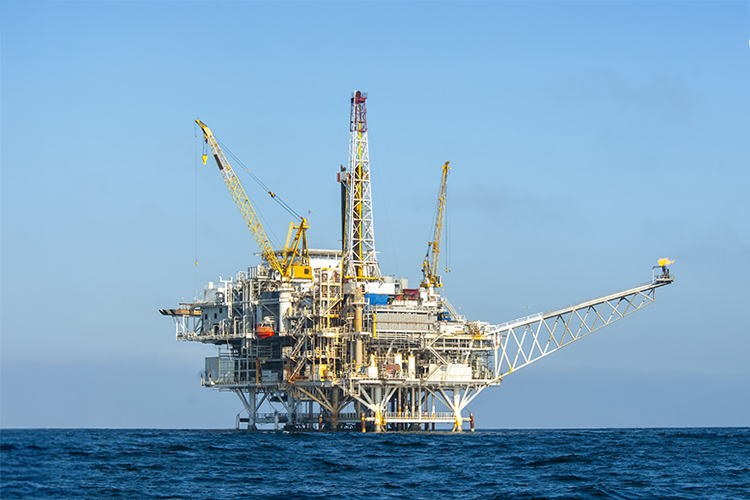
As offshore oil and gas infrastructure ages, replacing and improving critical components has become an important strategy for extending asset life. That shift is creating new opportunities for manufacturers to help operators improve reliability–while reducing production complexity and cost through smarter component design.
Whether replacing worn components or improving the manufacturability of critical equipment, suppliers play an important role in helping the offshore industry maintain reliable, long-term operations. One example is the stabbing guide.
In oil and gas drilling operations, every second on the rig floor matters. Every movement—from handling drill pipe to making connections—must happen quickly, safely, and with precision. Efficient, reliable drill pipe connection depends on equipment that can perform under extreme mechanical and environmental conditions.
One of those critical components is the stabbing guide.
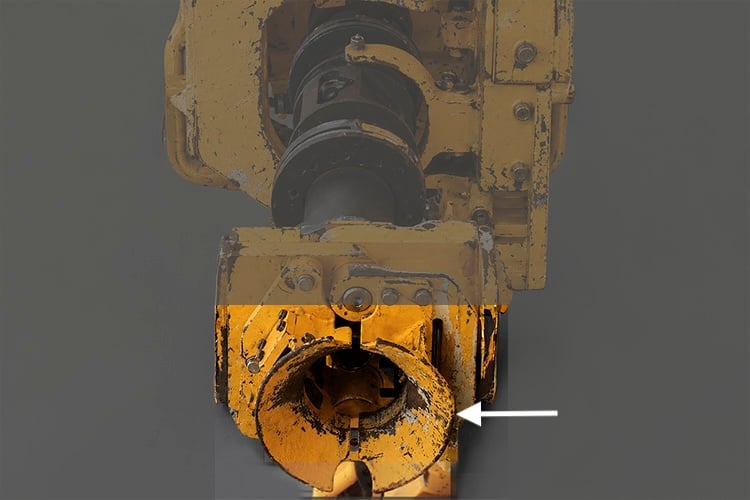
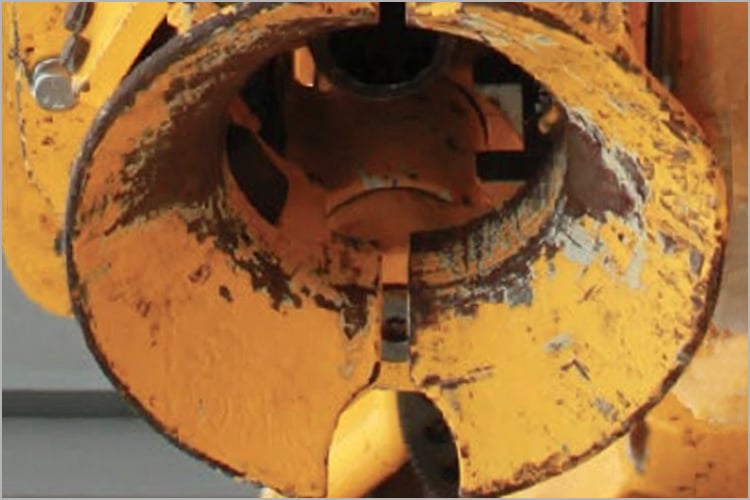
Mounted at the base of the top drive unit, stabbing guides help align and guide drill pipe during connection operations. While often overlooked outside the drilling industry, they play an important role in maintaining safe, efficient drilling sequences.
Re-thinking Production to Reduce Lead Times & Improve Cost Efficiency
For years, stabbing guides supplied by affiliate KC Welding—a Tier 1 supplier to the oil and gas and rail industries—were manufactured as complex fabricated weldments.
But when an end customer sought ways to reduce lead times and improve cost efficiency, production evolved into a strategic weldment-to-casting conversion involving KC Welding, Phenix Foundry, and Metalgoods Manufacturing (MGM).
 |
 |
Because Phenix Foundry, KC Welding, and MGM operate under shared ownership, the organizations were able to closely collaborate throughout the evaluation, engineering, and production process. By combining fabrication, casting, and machining expertise, the companies evaluated the original weldments from multiple manufacturing perspectives and developed a more efficient, integrated production solution.
Our review also highlighted where design-for-casting could eliminate unnecessary fabrication steps while preserving functional performance requirements.
Identifying the Opportunity
The original stabbing guide assemblies required extensive fabrication involving multiple components, forming operations, machining, welding, and final machining.
Two separate components within the assembly were identified as strong candidates for casting conversion.
 |
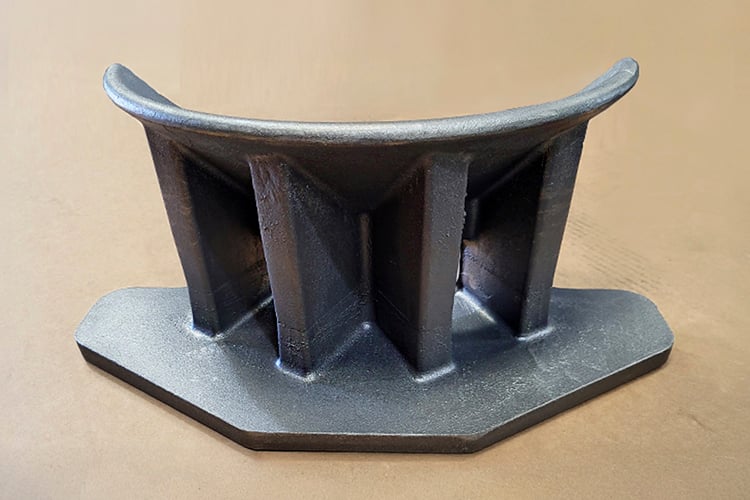 |
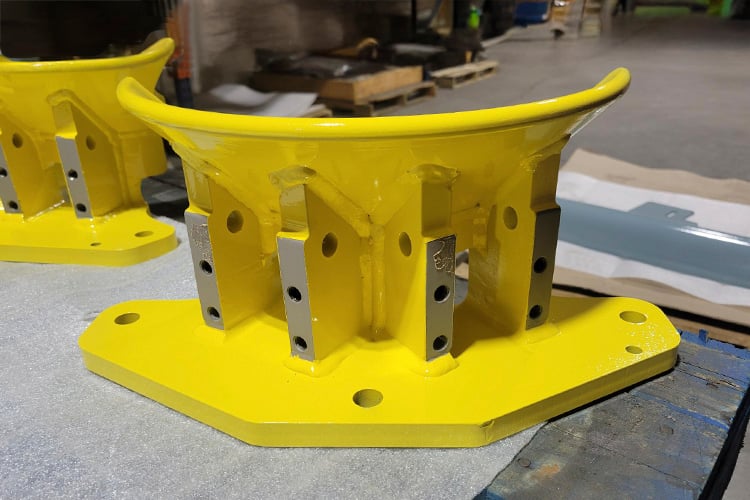
Piece #1: From Seven Components to One Casting
The first fabricated assembly included:
The redesigned casting consolidated the assembly into a single integrated component.
A key feature of the new design involved core prints running through the casting body to create mounting windows for the grippers—allowing the geometry to be produced directly in the mold rather than through extensive fabrication and secondary operations, improving repeatability and reducing weld-related distortion risk.
The result was a cleaner, more repeatable manufacturing process with significantly reduced fabrication complexity.
 |
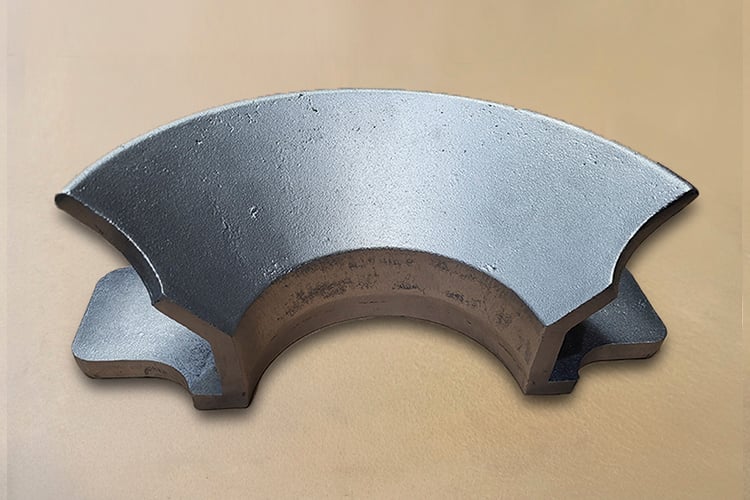 |
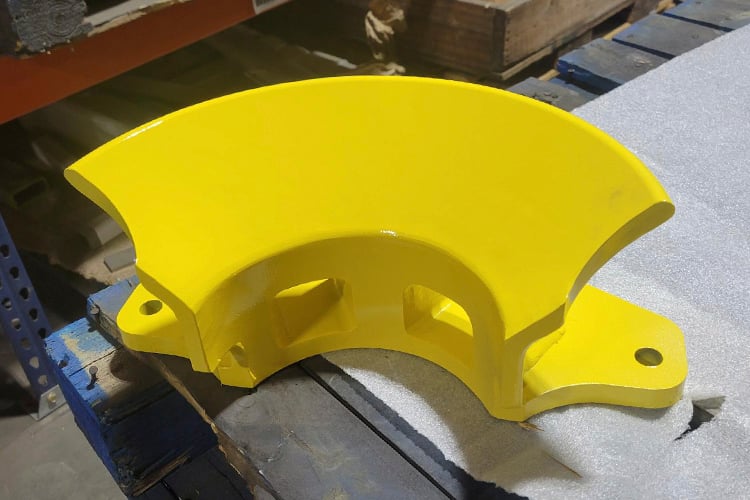
Piece #2: Consolidating Another Multi-Part Weldment
A second stabbing guide component underwent a similar transformation.
Originally manufactured from:
Phenix converted the design into a cast component while incorporating additional flexibility into the tooling strategy.
The tooling included a replaceable insert in the inside diameter, allowing the same tooling platform to support different drill pipe diameters without requiring entirely new tooling for each variation.
Integrated Manufacturing Value
While the conversion from weldment to casting was important, the larger value came from improving manufacturability across the entire production cycle.
By consolidating multiple fabricated components into castings, the project helped reduce:
The conversion also improved process consistency by producing parts from repeatable mold geometry rather than numerous manual fabrication operations.
For the end customer, this translated into:
Beyond Cost Reduction
Projects like this increasingly demonstrate that weldment conversion is not simply about replacing fabrication with casting—it’s about rethinking how a component can be manufactured more efficiently while maintaining performance requirements in demanding applications.
Casting also creates opportunities to integrate geometry and functionality directly into the part design in ways that would otherwise require additional fabrication steps or secondary processing.
In this case, the conversion allowed the organizations to simplify production while continuing to support the rugged operating environment of oilfield drilling equipment.
Collaborative Manufacturing Capabilities
At Phenix Foundry we continually look for new ways to advance manufacturing innovation, while also developing new and more effective ways to collaborate with our affiliated partners to deliver market-leading solutions to our customers—at lower cost, with improved consistency, and to faster lead times
As manufacturers continue looking for ways to improve lead times, consistency, and supply chain resilience, weldment conversion projects like this are becoming an increasingly valuable strategy for long-term operational improvement.
Contact us today to discuss your next iron casting project!
1 min read
Phenix Foundry provides a continuous supply of high-strength ductile iron castings for KC Welding’s heavy-duty toggle clamp assemblies. Used in...
2 min read
The best casting projects often begin before the first pattern is built—or even before the initial engineering drawing is complete. Involving your...
1 min read
Driving Efficiency, Consistency, and Cost Control For more than 55 years, Phenix Foundry has delivered high-quality iron castings to industries...